Tuesday, 19 May 2015

Game Reserves and national Parks in Tanzania

Tanzania Game Reserves and National Parks

Lake Manyara National Park

Lake Manyara National Park nesting under the wall of the Great Rift Valley is like a perfectly cut gemstone. It contains a variety of habitats and diverse animals and birds. It covers an area of 319sq Km, altitude 945 meters. Lake Manyara has 5 distinct zones.
•
    Extensive marshland reeds
•
    Plains of Savannah grassland
•
    Outback scattered with acacia trees
•
    Scrub-land on the face of the rift wall Ground water forest with towering mahogany and fig tree

Ngorongoro Crater
The largest intact crater in the world and second largest extinct volcano in the World has a spectacular concentration of wildlife. The crater rim is wooded with mountain forest vegetation. Its oval in shape and 20Km in diameter, 100sq miles in area, 2000 feet deep and 2286metres above sea level. Ngorongoro Conservation Area – sometimes referred as ‘African Eden’ boasts the finest blend of landscapes, wildlife, people and archaeological sites in Africa. The crater alone supports over 20, 000 large animals. The attractions in this crater include the soda lake, Lake Makat, the Lerai forest and the archeological site at Laetoli.
wildebeests

Serengeti National Park

Serengeti National Park is Tanzania’s first and most famous park. Each year more than 6 million hooves pound legendary ‘haven’ Serengeti endless plains. This migration is usually triggered by the seasonal rains whereby more than a million wildebeest, 200, 000 zebra and 300, 000 Thompson gazelle undertake this trek. As the herds move to new grazing grounds they are followed by predators such as lions, leopards, cheetahs, hyenas, jackals and hunting dogs waiting for weak prey, while vultures soar overhead waiting for their share of the kill. It is also known for its wealth of leopard and lions. This famous plain is interspersed with wooded hills, towering termite mounds, monumental rocky kopjes, and rivers lined with elegant acacia. One of the most unique wilderness areas of the world, fantastic in its natural beauty and unequalled in its scientific value. It occupies 14763sq Km. This Park is one of the most popular wildlife sanctuaries in the world.

Arusha National Park

This park is remarkable for its range of habitats – miniature volcanic craters, highland rainforest, acacia, woodland and a string of crater lakes (The Momella lakes). In addition, on clear day there are spectacular views of both Mount Kilimanjaro and Mount Meru. Arusha National Park offers many beautiful panoramic views. An opportunity to visit this park is not to be missed.

Tarangire National Park

This park is wooded savanna land with baobab trees alternating with open acacia woodland. Open plains, swamps are also a part of this beautiful game reserve that is also home to rivers along which stand palm trees. Big game and birds abound. Among the wildlife that can be seen are lions, elephants, zebras, oryx and many more. The bird-life is also extremely rich and varied.

Mt Kilimanjaro

This is the highest Mountain in Africa is just three degrees south of the equator and its two peaks, the KIBO (5,893m) and MAWENZI (5,149m) are permanently snow-capped. Ascent and descent takes five days and can be climbed by any normal, fit person with the assistance of experienced mountain guides and porters. Kilimanjaro can be climbed at any time of the year except during the long rains April and May.

Olduvai Gorge

Within Ngorongoro conservation area is the Olduvai Gorge, some 180 Km west of Arusha, the northern tourist capital of Tanzania. The remains of Homo Habilis or "Handy Man" regarded as mankind’s first step on the ladder of the human evolution. Guides operate lecture tours on the archeological sites.

Mikumi National Park

Mikumi, the most accessible park from Dar es Salaam. Prominent features here are the Mikumi flood plain and the mountain ranges that rise on two sides of the park. And all the usual suspects of wild Africa have their home here, not to mention a few peculiar ones such as yellow baboons. Mikumi is located 300 km for Dar es Salaam and is the most accessible park for those departing from Tanzania’s capital. Prominent features of the park are the Mikumi flood plain and the mountain ranges that rise on two sides of the park. You will encounter elephant, giraffe, zebra, buffalo, hippo, crocodile, wildebeest, eland and Lichtenstein’s hartebeest. Lion and wild dogs are among the carnivores common here. Towards the southern end of the flood plain live families of yellow baboon. Over 300 species of birds have been recorded in the park. Many are Eurasian migrants who stay between October and April.

Ruaha National Park

Ruaha is the largest elephant sanctuary in the country. The lifeblood of the park is the Great Ruaha River with its spectacular gorges. It is host to numerous plain animals and the predators that follow them -lion, leopard, hyena, wild dog and jackal. Ruaha National Park is an unspoilt wildlife park in central Tanzania. It occupies 10,000 sq km and carries 8000 tuskers making it the biggest elephant sanctuary in the country. The Great Ruaha River with its spectacular gorges flows along the parks’ eastern border and is host to hippo and crocodile. The river is the parks lifeblood and provides drink for water buck, reed buck and buffalo. This in turn attracts the predators: lion, leopard, hyena, wild dog and jackal. Plain animals thriving in the grasslands of the Ruaha include: greater and lesser kudu, impala, sable and roan antelope, giraffe, zebra, dik -dik and Grants gazelle. Birds are plenty too- over 370 species have been recorded.

Selous National Park
The largest protected wildlife sanctuary in the whole of Africa. Selous, a UN World Heritage site, is a pristine wilderness of rolling savanna woodland, grassland plains with a network of lake and rivers. You have the chance to view game in a novel way, while sailing or rafting down the Rufiji River. Then to unspoilt Ruaha, home to thousands of elephants and numerous plain animals and the predators that follow them -lion, leopard, hyena, wild dog and jackal. Then you head to Mikumi, where all the usual suspects of wild Africa have gathered, not to mention a few peculiar ones such as yellow baboons. Selous Game Reserve occupies an area larger than Switzerland and is the largest protected wildlife sanctuary in the whole of Africa. This UN World Heritage site is a pristine wilderness of rolling savanna woodland, grassland plains with a network of lake and rivers. The lifeblood of the Selous is the Rufiji River and sailing or rafting down the river is a novel way of seeing game. You will find an amazing concentration of wildlife including elephant, lion, buffalo, crocodile, hippo, and wild dog. Other species resident here are zebra, baboon, giraffe, greater kudu, baboon, bush buck and impala.


For cost send your enquiries to our email address:info@victoriasafaris.com


reservations

separator


Ugandas Parks

Uganda Game Parks, Uganda National Parks, Game Sanctuaries in Uganda, Bwindi, Murchison, Queen Elizabeth

Murchison Falls National Park
Area - over 4,000 square kilometers
Approx. distance from Kampala: 300 Km estimated transit time: 4 1/2 - 5 Hrs

The largest park in Uganda, renowned for its scenic beauty and the spectacular Falls from which it gets its name.No visit to Murchison Falls would be complete without a visit to the magnificent falls. They can be viewed from the top where the Nile River narrows from 50 meters to crash through a 7-meter gorge, falling 45 meters to the rocks below. Avid birdwatcher will want to seek out some of the 424 species identified in the park. Fishermen can test their skills above and below the Falls, waiting patiently for 20-70 kg. Nile perch. Other game fish found in the Nile include Barbel, Electric Catfish and Tiger fish.While on the game drives, Cape buffalo, Rothschild giraffe, Uganda kob, hartebeest and water buck are commonly seen. You may also spot oribi, bush buck, Bohor reed buck, shy sitatunga, bush duiker, warthog and bush pig. Large carnivores include lion, leopard and spotted hyena.

Chimpanzees and olive baboons head the list of six species of primates found in the park. Crocodile and hippo will be seen along the banks of the Nile. Some of the more common birds that can be seen include goliath heron, Egyptian geese, pelican, bee-eaters, kingfishers, horn bill, cormorant, saddle-bill stork and the rare shoe bill stork. A boat cruise to the delta is a highlight for the avid birdwatcher.
waterfall
Lake Mburo National Park Area- 260 square kilometres
Approx. distance from Kampala: 230 km estimated Transit Time: 3-4 Hrs

It lies along Mbarara Road within easy access of Kampala. It is ideal for a transit stop to/from the gorilla sanctuaries or Queen Elizabeth National Park. It is an attractive park of rolling hills and open grassy valleys, interspersed with thickets, woodlands and rich wetlands. Find here herds of zebra, Cape buffalo and eland. Oribi and Topi are easily approached. Along with a game drive, many visitors enjoy a boat trip on Lake Mburo. Birdwatchers, will enjoy the more than 250 species of birds found in Lake Mburo including Papyrus Gonolek, Brown faced Lapwing. Carruther's Cisticola, the extraordinary White winged Warbler and Bare-Faced-Go- Away bird.

Mgahinga Gorilla National Park
Area – 34 square kilometres
Approx. distance from Kampala: 510 km estimated transit Time: 8-10 Hrs

It is the Ugandan part of the Virunga Conservation Area, where half of the world's mountain gorillas make their home, this park shares boundaries with Rwanda and Congo/Zaire. The park is comprised of parts of three extinct volcanic mountains, Mt. Muhavura (4127 m), Mt. Gahinga (3475 m) and Mt. Sabyinyo (3645 m). The vegetation of Mgahinga is typically afro -montane, with a forest belt, a bamboo zone, an ericacious belt and an alpine zone. The park supports a variety of animal species including gorilla, rare golden monkey, buffalo, elephant, leopard and several cat. There are also over 180 species of bird found in the region. Among these are the handsome fancolin, the Rwenzori touraco and the side-breasted tit.About 45 mountain gorillas use the Mgahinga sector of the Virunga Conservation Area seasonally.

Gorilla trekking is available here when the gorillas are in the park. They are usually resident in the months of April, May and June and October, November and December. Mgahinga also offers a number of other exciting half-day hikes and the challenge of a full-day climb to the summit of Mt. Muhavura or Mt. Gahinga, or the breathtaking Sabyinyo Gorge.

Bwindi Impenetrable National Park
Area –330 square kilometres
Approx. distance from Kampala: 550 Km estimated transit Time: 8-10 Hrs

It is one of the largest natural forests in East Africa, supporting a large number of plants and animals not found elsewhere. About half the world's population of 600 mountain gorillas reside in Bwindi. The vegetation, as the park's name implies, is composed of tropical rainforest with dense undergrowth. This rugged terrain makes hiking in search of gorilla strenuous work. Visitors who trek should be prepared for up to 8 hours of hiking. Good physical condition is required. A maximum of only 6 permits per day are available for advance booking, so confirmation 4-12 months in advance is required to avoid disappointment. Along with the gorillas, there are nine other species of primates including chimpanzee, blue monkey, red tail monkey, L'hoest's monkey, black and white Columbus, potto, Demidoff's and needle-clawed galago.

Three hundred forty-seven species of birds have been recorded in Bwindi; seven species are listed as endangered. Species of particular interest include the Kivu ground thrush, white-bellied robin chat, red-throated alethe, collared apallis, short-tailed warbler, yellow-eyed black flycatcher, Rwenzori batis, blue-headed sunbird, strange weaver and the Shelley's crimsonwing. Over 200 species of butterflies have also been recorded here.

Queen Elizabeth National Park
Area – 2000 Square kilometres
Approx.distance from Kampala: 440 km estimated transit time: 6 hrs

As one of the outstanding treasures of Uganda, QENP has recently been designated a Biosphere Reserve for Humanity under UNESCO. It is the home of the famous tree-climbing lions, the Uganda kob and other antelope as well as elephant, buffalo, hippos, baboons and chimpanzee. Over 500 species of birds have been recorded here making it a prime target for birdwatchers. Species recorded include the shoe bill stork, black bee-eater, 11 types of kingfishers and a variety of raptors including several falcons and eagles. In the crater lakes, spectacular flocks of flamingos gather, creating the image of a moving pink carpet.

The launch trip along the Kazinga Channel between Lakes George and Edward is a memorable way to view the abundant game in Queen Elizabeth. North of the main gate is the crater area, one of the most scenic parts of the park. To the East, in Kyambura Gorge, visitors can climb through tropical forest and catch a glimpse of a variety of primates, including chimpanzee. In the more isolated Ishasha sector of the park, search the woodlands for the tree-climbing lions perching on the boughs of ancient fig trees. To the southeast, travelers can explore newly opened trails in Maramagambo forest.

Kibale Forest National Park
Area - 766 square kilometres
Approx. distance from Kampala: 360 kms / 550 kms estimated transit time: 5 hrs / 7 hrs

It contiguous with the northern end of Queen Elizabeth National Park, but Kibale is much wetter with a unique moist forest habitat and an extremely high diversity of animals and plants.This mature tropical rainforest supports the highest number of primate species in Uganda, and one of the highest primate densities in the world. There are 12 species of primates located here: red Columbus monkey, black-and-white Columbus monkey, red tail monkey, L'hoest's monkey, blue monkey, mangabey, olive baboons and several communities of chimpanzee. About 400 species of birds have been reported in Kibale. A number of these species are found only in this park. In addition, over 150 species of butterflies and a large number of moths can be discovered here.

For cost, send your enqui

ries to our email address: info@victoriasafaris.com


reservations

separator


Monday, 18 May 2015

The Best of Kenyas Game reserves and National Parks

Kenya Game Reserves and National Parks

Kenya, Uganda and Tanzania have, collectively one of the highest land areas under wildlife conservation and they have invested a large sum of money in ensuring the this heritage is safe guarded for their countries prosperity.

In visiting these three countries you are assured of seeing one of the last places on earth where wildlife roam freely and intermingle with the local people.
lioness in the wild
  MAASAI MARA: Kenya’s finest Game Reserve and a great opportunity to view the big five (lion, leopard, buffalo, elephant and cheetah). The annual migration of wild beast and zebras from the Serengeti National Park in Northern Tanzania provide the highlight between June and August. In the remainder of the year the Park is still rich in wildlife having the greatest density of wildlife per square kilometer in Kenya
SAMBURU AND SHABA NATIONAL RESERVE: These National Game Reserves are situated in the northern part of Kenya, on the fringes of the hot and sparsely populated dry region. The attract a different range of wildlife species unique to the area, among which are the gerenuk, the beisa's oryx, the reticulated giraffe, the blue legged ostrich and the grevy's zebra.

ABERDARE NATIONAL PARK
: Center for Kenya’s forest lodges (tree hotels) including the world famous Tree Tops. Night game viewing is available for those whose interests include the nocturnal wildlife and the many mountain animals are seen from the comfort of the balcony as the come to drink from the nearby salt lick.

GREAT RIFT VALLEY (LAKES NAKURU, BARINGO, BOGORIA, NAIVASHA, MAGADI AND CHERENGANI HILLS, HELL’S GATE NATIONAL PARK)
Thousands of flamingos visit the lakes seasonally. Excellent for those in search of bird-life (An Ornithologists’ paradise). Lakes also attract a large variety of wildlife, water birds and predators.
zebras


AMBOSELI NATIONAL PARK: The Mighty Kilimanjaro forms a beautiful backdrop. Amboseli Game Sanctuary is famous for elephants, buffaloes and birds.


TSAVO NATIONAL PARK
: One of the largest game parks in the world surrounded by the beautiful Chyulu hills and the Pare mountains. Mzima springs, a natural and clear watering point is great for game viewing. Tsavo is also famous for its large number of elephants among other species of the animal kingdom.

KAKAMEGA FOREST: An Ornithologist’s paradise - here you can find about three hundred species of birds, some of which are unique to this part of the country. A natural and ancient forest excellent for game or botanical walks.


MOUNT ELGON NATIONAL PARK: This unspoiled national park is famous for caves, game viewing and hiking. Situated on Kenya /Uganda border, the highest peak on Kenyan side (Koitobos) is about 4,200 meters high. Kitum cave (place of ceremonies) extents 200 meters into the mountain. At night animals go in to feed on the rich salt deposits. An unforgettable sight is of the elephants licking away at the salt walls in these caves.
Thompsons gazelle


NDERE ISLAND NATIONAL PARK (Meeting Place): This place is where Mikaye (the mother of Luo) rested after her long journey, before she found shelter on this island close to the rock that goes by her name. Ndere Island is also home to a large population of crocodiles, swamp antelopes and birds. Fishing can also be done nearby. Situated in northern part of Lake Victoria near Kisumu, Ndere Island National Park can only be accessed by boat.

RUMA NATIONAL PARK: This rarely visited national park is home to a number of Kenyan animals and birds. Famous for Roan antelopes (hippopotamus equines ) which are an endangered species of antelopes.

MOUNT KENYA NATIONAL PARK
: Surrounded by 130,000 acres of forest reserve. Visible from the mountain top on a clear day are Mount Kilimanjaro to the south, Mount Elgon to the west, Marissa Mountain to the north and the Indian ocean to the east. Hiking, climbing and game viewing for rare mountain wildlife can be done here.

LAKE TURKANA NATIONAL PARK
: Situated on Ethiopia /Kenya border. Africa’s longest Rift Valley lake. The Great Rift Valley is a symbolic relic of the massive upheavals in the earth’s crust some 10 million years ago which opened the world’s largest geological divide stretching over 3,500 miles from Danilil depression at Ethiopia’s northern Red Sea coast line to Mozambique. Turkana has the largest number of crocodiles in the world - more then 10,000. A number of pre -historic human fossils have been found here including the Australopithecus.

For questions send your enquiries to our email address:info@victoriasafaris.com


reservations

separator


Western Kenya Eco-Tourism Adventure

 Western Kenya Eco-tourism Holidays - 9 Days

 Highlights:Nine day trip to Western Kenya is the most beautiful experience with lots of attraction such as Lake Victoria which is the world's second largest fresh water lake, the natural Kakamega forest which has indigenous trees and wild animals, lake Victoria's Islands and tour around beautiful cultured towns of Western Kenya. Western Kenya offers best hospitality in their luxurious hotels and restaurants for accommodation. Victoria Safaris will you with the best transportation services during the tour in our comfortable minibuses.

                         Itinerary
DAY 1 NAIROBI - KISUMU
Leave Nairobi in the morning,pass through the rift valley via Nakuru with a short stop over at Merica hotel for tea or refreshments and have lunch at Kericho tea hotel. Walk in the tea plantations then drive via Lwanda Magere (the Luo warrior who was killed and turned into a stone) continue to Kisumu for dinner and overnight stay at sunset hotel.


DAY 2 NDERE ISLAND NATIONAL PARK – KAKAMEGA
After breakfast drive to Kaloka beach, talk to the fishermen and the women fishmongers by the beach before taking a boat to Ndere Island national park see some game and bird life. Board the boat back to Kaloka beach. Drive via Kit- Mikaye ( This rock is where Mikaye the mother of Luo tribe sheltered herself after along journey down the Nile),have a chat with the local leaders about the history of kit mikaye, drive back to Kisumu for Lunch. Kisumu tour takes you to Impala park, Kisumu Museum,kiboko bay and Dunga beach are optional. Drive to Kakamega arriving late evening, dinner and overnight at Golf hotel- kakmega.

DAY 3 KAKAMEGA FOREST - KISUMU
After breakfast,drive to kakmega forest, full day exploration of Kakamega forest in search of birds, butterflies and animals such as debraza, colobus, blue and red tailed monkeys and olive baboons. Over 30 varieties of snakes including the deadly gaboon viper, Jamesons mamba and black mamba are found here among other animals. Great and very old indigenous trees, some are hundreds of years old. Drive to Kisumu past the weeping stone of kakamega. visit riat hills for panoramic view of lake victoria and kisumu city.Dinner and overnight at kisumu hotel.


DAY 4 KISUMU - HOMA BAY
Leave Kisumu after breakfast, drive southwards through Ahero rice plantations in Kano plains to Odino falls,view the developments around the power generating complex. Continue to Kendu bay for lunch. Proceed to lake Simbi Nyaima for bird viewing , continue to Kanjira and Kanam hot springs onto Homa bay.Dinner and overnight stay at Homabay tourist hotel..

DAY 5 HOMA BAY -RUSINGA - MBITA
After breakfast, drive to Rusinga island, do a tour of the Island to the historical places including the museum (where the remains of the first man were found) by Doctor Louise Leakey, Tom Mboya Mauseleum where this accomplished nationalist cum- politician was burried after his assassination on a Nairobi street in 1969. Return to Mbita for dinner and overnight stay at Lake Victoria Safari Village.

DAY 6 MBITA- RUMA NATIONAL PARK - AWENDO
Depart after breakfast drive through hills and meandering road to Ruma national park with a picnic lunch, do game drive then drive out to Thim Lich Ohinga onto Gogo falls then to Awendo for dinner and overnight stay at Sony Sugar company guest house.
       

DAY 7 AWENDO - MAASAI MARA
Depart Awendo, drive through sugar plantations via Lolgorien to Maasai Mara national reserve, dinner and overnight at the lodge / campsite on the northern part of Maasai Mara.

DAY 8 MAASAI MARA
Early pre- breakfast game drive, after breakfast with packed lunch whole day game drive to the other side of Mara to Mara Sopa lodge for dinner and overnight at lodge / campsite.


DAY 9 MAASAI MARA - NAIROBI
After breakfast, depart for Nairobi, enjoy your lunch enroute, arrive in Nairobi in the evening.


Includes:
- Free airport pickup
- Full board accommodation on safari/including home stays
- Service of an English speaking driver guide
- Transport based on a safari minibus with pop up roof for game viewing
- Driver allowances and park fees for vehicle and driver
- Government taxes
- Free farewell dinner at the famous Carnivore Restaurant

Excludes:
- Extras at the lodges i.e. drinks, telephone, laundry etc.
- Both local and International flights
- Departure tax
- Tips to porters and drivers
- Local charges and participatory fees


reservations

separator

Car Hire and Car Rental Services in Africa

Car Rental, Vehicle Leasing and Car Hire in Africa
Africa is a Continent of Safaris. Victoria safaris, a tour Operator based in Africa has has since started a package for those who want to Rent cars and other Motor Vehicles and other transport equipment including; Rental of Adventure Boats on Lake Victoria, Hiring out of Wedding Ceremonial Vehicles, self drive saloon Cars, Self drive 4x4 Rav 4's and 4x4 Safari Land Cruisers plus Safari Minibuses with a carrying capacity of 9 persons.
Car Rental , Vehicle Leasing and Car Hire in East Africa
East Africa includes ; Kenya, Uganda, Rwanda, Burundi and Tanzania which includes Pemba and Zanzibar. Victoria Safaris has started the following Car rental and car leasing and Car hire services in Kenya, and affiliates in Uganda and Tanzania and soon we will open branches in Rwanda and Burundi.

    Self Drive Car Rental and Car Leasing in Kenya, Uganda and Tanzania
    Chauffeur driven Car Rental and Car Leasing in Kenya, Uganda and Tanzania
    Corporate Car Rental and Car Leasing in Kenya, Uganda and Tanzania
    Corporate Staff Transportation in Kenya, Uganda and Tanzania
    Governments Departments' Vehicle Rental and Leasing and other vehicles in Kenya, Uganda and Tanzania
    Non Governmental Organizations Car Rental and Car leasing in Kenya, Uganda and Tanzania
    School and college students transport vehicle leasing .
    Hire of other Adventure transport equipments including: Boats on Lake Victoria and in side Indian Ocean, Motor Bikes and Bicycle Rentals.

Car Rental , Vehicle Leasing and Car Hire in Kenya
In Kenya, Victoria safaris rents cars and other SUV s in Nairobi, Kisumu and Mombasa.

Car Rental , Vehicle Leasing and Car Hire in Nairobi City:
we are based at our Headquarters – Cargen House, Harambee Avenue, Nairobi city and at the Jomo Kenyatta International Airport..

Car Rental , Vehicle Leasing and Car Hire in Kisumu city:
We are based at the Kisumu International Airport and at Alpha house ( Ounga Commercial Agencies - offices) at the centre of the Kisumu city.

Car Rental , Vehicle Leasing and Car Hire in Mombasa City:
We are based at the Moi International Airport.

Car Rental , Vehicle Leasing and Car Hire in Uganda and Tanzania
This is done by our affiliate companies based in Arusha, Dar es salaam in Tanzania and Kampala city in Uganda.
Motor Vehicles available for Rental, Leasing and Hire:

Motor Vehicles available for Rental, Leasing and Hire range from the following:
Salon Sedan Inside

Saloon for hire
Saloon Cars;
Toyota Corolla, Nissan Sunny, Kia, Mitsubishi,

SUV s
A sport utility vehicle (SUV); These are vehicles similar to station wagons but built on a light-truck chassis. Usually equipped with four-wheel drive for on or off-road ability, some SUV s include the towing capacity of a pickup truck with the passenger-carrying space of a minivan. These include;

Suzuki Vitara, RAV4, Isuzu Trooper, Mitsubishi Pajero, Toyota Land Cruisers and Land Rovers.

Trucks
These include overland trucks and trucks for transporting goods. These include;
Isuzu trucks, Leyland Trucks, Mitsubishi trucks and Tata trucks.

All are maintained in prime condition in their own dealer workshops and offer the opportunity and freedom to move around the city, around towns or embark on a safari.

Terms and Conditions for Car Rental

Driver's License:
The Hirer / Renter and / or authorized driver must have held a full and valid driving license for a minimum of 2 years up to and including the time of hire and that license must bear no current endorsements during the last two years. A driving license from the country of residence or an International Driver's Permit is generally acceptable, provided valid as above

Driver:
The Hirer / Renter and / or authorized driver must be over 23 years of age and under 70 years of age. The hirer and/or authorized driver must also be in possession of a proper means of identification other than a driver's license.

Insurance:
A compulsory daily insurance charge is payable by the hirer. All our vehicles are insured but in all cases, the hirer is responsible for repairs arising from damage caused by carelessness.

Car Hire Agreement:
Self drive cars are hired subject to the company's standard form of agreement notwithstanding the above conditions the company reserves the right to refuse a hirer at anytime without assigning any reason.

Security:
The vehicles must be locked when unattended. The vehicle must not be parked in a public area for long periods. The Hirer / Renter / Lessor is responsible for the security of the vehicle and in the event of theft is liable for payment of excess fees equivalent to 10% of Value of vehicle to the insurers. The hirer or renter must not carry passengers for reward or gain.

Terms of Payment:
By cash, travelers cheque or foreign currency. A deposit and approximate Hire /Rental / Leasing charges are to be made on making the contract. Payments can also be made by credit cards i.e. Visa and MasterCard and the total cost of the rental will be charge on completion excluding fuel.


For cost send your enquiries to our email address:info@victoriasafaris.com


reservations

separator


Fascinating Mt.Meru


4 days& 3 Nights-Mt Meru Climbing / Trekking Mount Meru
Highlights:Climbing Mount Meru is quite fascinating. It last erupted in 1910 therefore can be classified as an active volcano. Mount Meru is regarded as Mount Kilimanjaro's little sister, standing at 4,566m compared to 5,895m, but is still an impressive freestanding volcano, which makes a superb four day climb to the top. The town of Arusha lies at the base of Mount Meru Trekking, loads of trek companies do this trek. Wild animals are frequently found on this mountain therefore an armed ranger usually accompanies the trekkers. Mount Meru hiking is a strenuous climb so you need to be very fit in order to achieve this trek, you should be use to long trekking and had some high altitude experience. The first Mount Meru ascent was made by Dr. Fritz Jaeger, 1904.
climbers
Detailed Itinerary
Arrival - Nairobi / Kilimanjaro Airport
On arrival at the Jomo Kenyatta international Airport, you will be transferred to Arusha arriving ready for lunch and then to Moshi town where you will be accommodated ready for the climbing the next day. Alternatively, on arrival at the at Kilimanjaro Airport, you will be met by our tour manager who will then transfer you to your hotel for overnight rest on bed and breakfast ready for next day climbing expedition.
 
Day 1: Arusha - Mariakamba Hut
Mt. Meru Park Gate - Mariakamba: 4-5 hours
After an early breakfast, you will be driven from Arusha to the Mt. Meru park gate where you will be met by our game ranger and porters. Hike for the few hours to Mariakamba Hut at 8,500 ft. From here you may wish to take an evening walk on the slopes to view wildlife at one of the watering holes in the crater. Dinner and overnight rest at Mariakamba Hut, L,D

Day 2: Mariakamba Hut - Saddle Hut
Mariakamba - Saddle Hut: 3-4 hours
After breakfast hike to up to 11,500 ft to arrive at Saddle Hut. If time permits you can climb a little further on Mount Meru for a scenic view of the 'Roof of Africa', Mount Kilimanjaro. This will also be part of more acclimatization. Overnight at Saddle Hut, B,L,D

Day 3: Saddle Hut - Summit - Mariakamba Hut
Saddle Hut - Summit: 4-6 hours
An early rise to hike all the way to the summit before the afternoon clouds cover the summit. From the summit, descend back to the 11,500 ft Saddle Hut in time for lunch. After lunch, hike down to Mariakamba Hut for dinner and overnight, B,L,D.

Day 4: Mariakamba Hut - Arusha
Breakfast at the camp and a leisurely morning. Descend to the park gate to connect with your waiting transfer vehicle back to your Arusha Hotel.

End of Safari

For cost send your enquiries to our email address:info@victoriasafaris.com


Include:

* Transport to and from Nairobi to Arusha or Kilimanjaro Airport to Arusha town and back
* Transport from your hotel to the Park Gate,
* Mt Meru route trek as itinerary depicts
* All services begin and end at Nairobi / Kilimanjaro Airport as per the itinerary
* Accommodation and 3 meal plan while in mountain huts or tents when camping
* Service of an English speaking professional Mountain guide on the mountain, porters and skilled cook together with treated water on the trek
* All National Park entrance and camp site fees, Rescue fees, Hut fees,
* All food - breakfasts, lunches (packed if necessary) and evening meals prepared by our own cook.
* Return airport transfers from/to Nairobi / Kilimanjaro Airport
Mt Meru Climbing

Exclude:
* Travel and personal accident insurance
* Tips, Visas, International flights and taxes
* Personal hiking equipment-sleeping bags, boots etc
* Expenditure on all drinks
* Medical evacuation insurance
* Items of a personal nature and any other extras not detailed in the above itinerary


reservations

separator


The Untamed Elgon Trekking

8 Days& 7 Nights -Mountain Trekking (Mt. Elgon) .
(Climbing Mt Elgon From Uganda, Trekking On Mount Elgon, Hiking In Uganda, Climbing Uganda Mountains, Mountain Climbing In Uganda)

Highlights
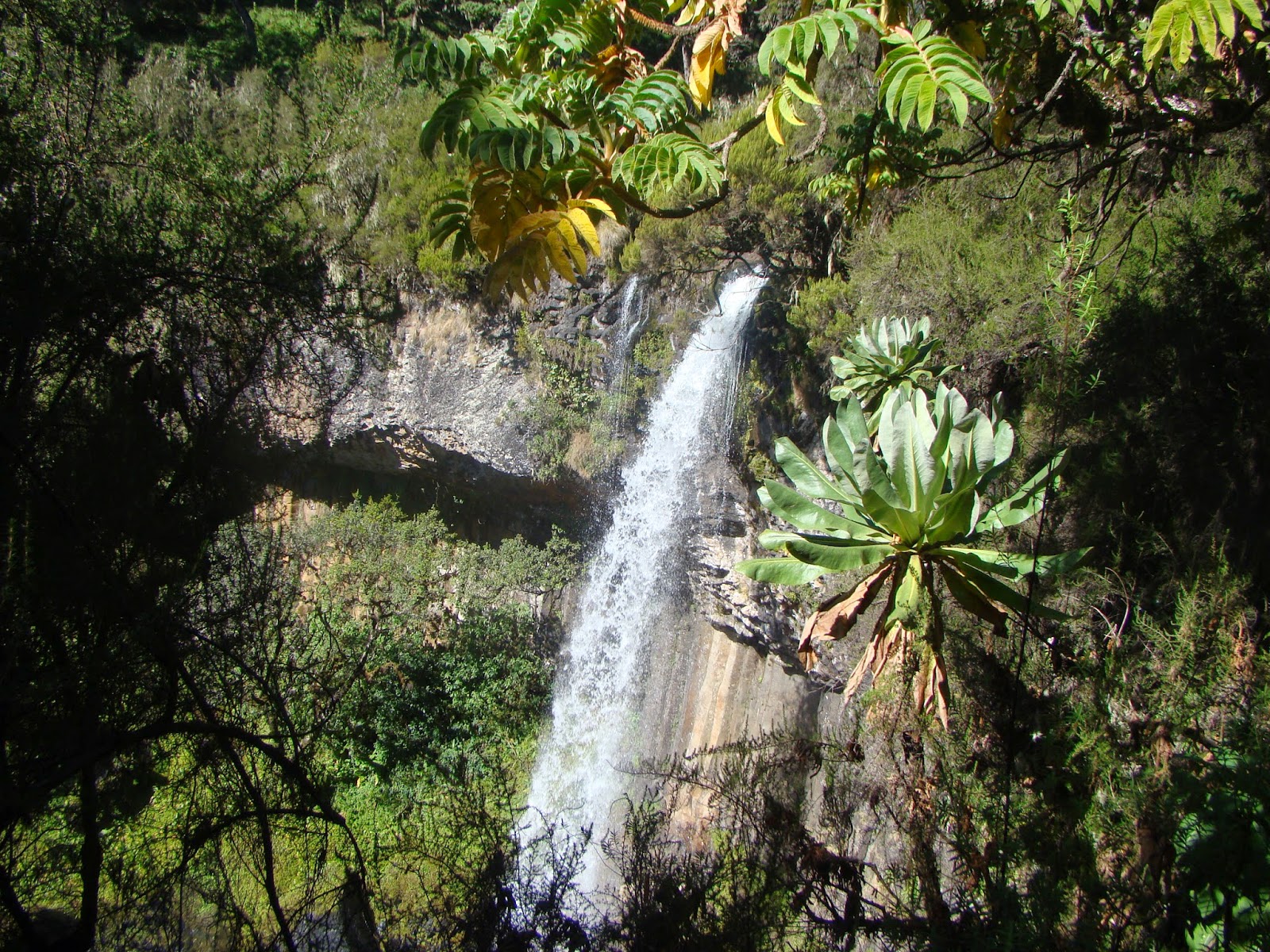
Mount Elgon is an extinct Volcano that erupted 24 million years ago. Hiking this mountain presents an exciting setting of unique flora and fauna, waterfalls, caves, peaks and gorges and hot springs. Hiking takes place the whole year but better during dry moths of June to August and December to March. No technical experience is needed.
Detailed itinerary
Day 1
Drive through Jinja, stop for lunch in Mbale town proceed Budadiri.Dinner and overnight at Rose Last Chance Hotel - Budadiri.

Day2:
Park entry clearance and begin Mountain climbing and overnight at Mude Cave Camp.

Day3:
Climb over Jackson’s pool before making it to Wagagai peak (4321m) or Jackson Peak (4165m). Overnight at Mude Camp.

Day 4: 
Visit the Caldera with collapsed peaks on top of the mountain. Descend to overnight at Kagyenyi camp or any other camp depending on the guide’s advice.

Day 5: 
Hike to the hot springs and Suam gorge and descend to overnight Mude camp.


Day 6: 
Descend following the Sasa or Piswa trail. Overnight at Rose Last Chance Hotel in Budadiri.

Day 7:
 Early morning visit the Sipi falls before driving to Jinja, lunch en-route, return to Kampala or overnight at Jinja.

Day 8:
(Optional) Rafting on river Nile the whole day and return to Kampala in the evening

End of Safari

For cost send your enquiries to our email address:info@victoriasafaris.com

 Cost Includes:
  • 6 nights accommodation and meals at full board
  • Park fees, guided fees, hiking fees, porters fees, rescue fees
  • 4x 4 WD vehicle with fuel and driver/guide
  • Visit to the source of River Nile

Add on safaris (Optional)
  •     3 Days Gorilla tracking in Bwindi National Park
  •     1 Day white water rafting on River Nile grade 5 rapids
  •     1 Day visit to orphanage chimps - Ngamba Island
  •     1 Day Nakasogora White Rhino Farm
  •     3 Day Ssese Islands on Lake Victoria


Excludes:
  • Drinks,
  •  bar bills,
  •  phone calls, 
  • personal insurance, and 
  • expenses of personal nature like souvenirs, tips  & laundry,
  •  airport transfers accommodation in Kampala on the first and last night etc.
What to Bring:
Tent, Sleeping bag, Warm clothes/gloves/hat, Sturdy hiking shoes, Flash light, Water bottle, Rain Gear and First Aid Kit. Trekking takes place daily unlike Mountain Rwenzori which starts on specific days of the week.

reservations

separator